designing an activation ecosystem
Role: Strategy Lead, Interior Design Team
Typology: Retail Architecture
Size: 13,000m²
Completed with: McKinley Studios
Bringing clarity and vibrancy to a dated and confusing office campus.
Blurring Time, Space, and Experience
An inward-facing office campus, shaped over time and optimized for the 9–5, began to fall out of step with the city around it. Positioned at the intersection of downtown workers, local residents, and a steady flow of visitors, it held the right ingredients—but lacked cohesion. Retail was fragmented, much of it buried below grade, and the experience read as a series of disjointed moments rather than a continuous whole.
The project reframes the campus as an urban connector: not simply a place to pass through, but one that draws people in, carries them across it, and invites them to stay.
From Disconnected to Porous
The process began with alignment—bringing together perspectives across leadership, leasing, brand, and architecture to define a shared direction. From there, a central question emerged:
How might this site operate beyond office hours, and for more than office workers?
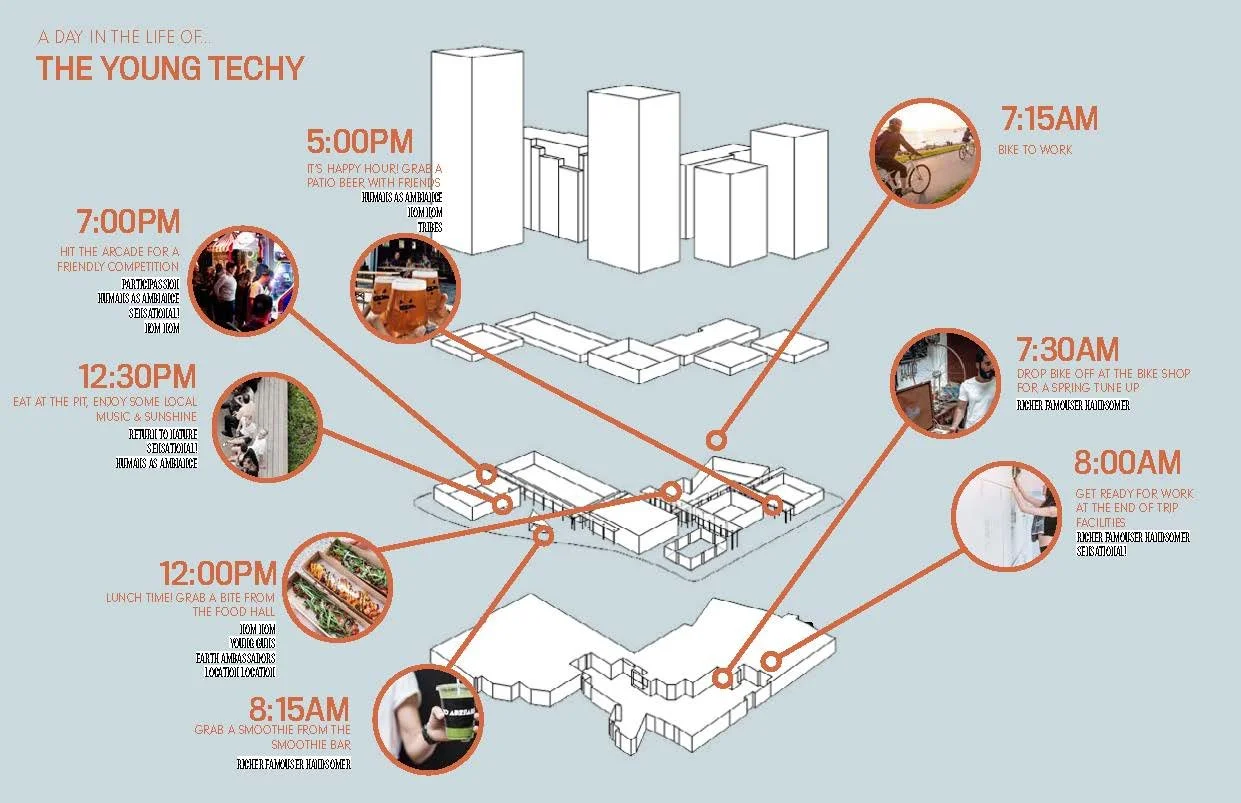
Answering it required a shift in approach. Instead of planning for static use, the strategy focused on behavior—how people move, dwell, and return. Commercial logic, spatial design, and user experience were treated as interdependent systems rather than separate layers.
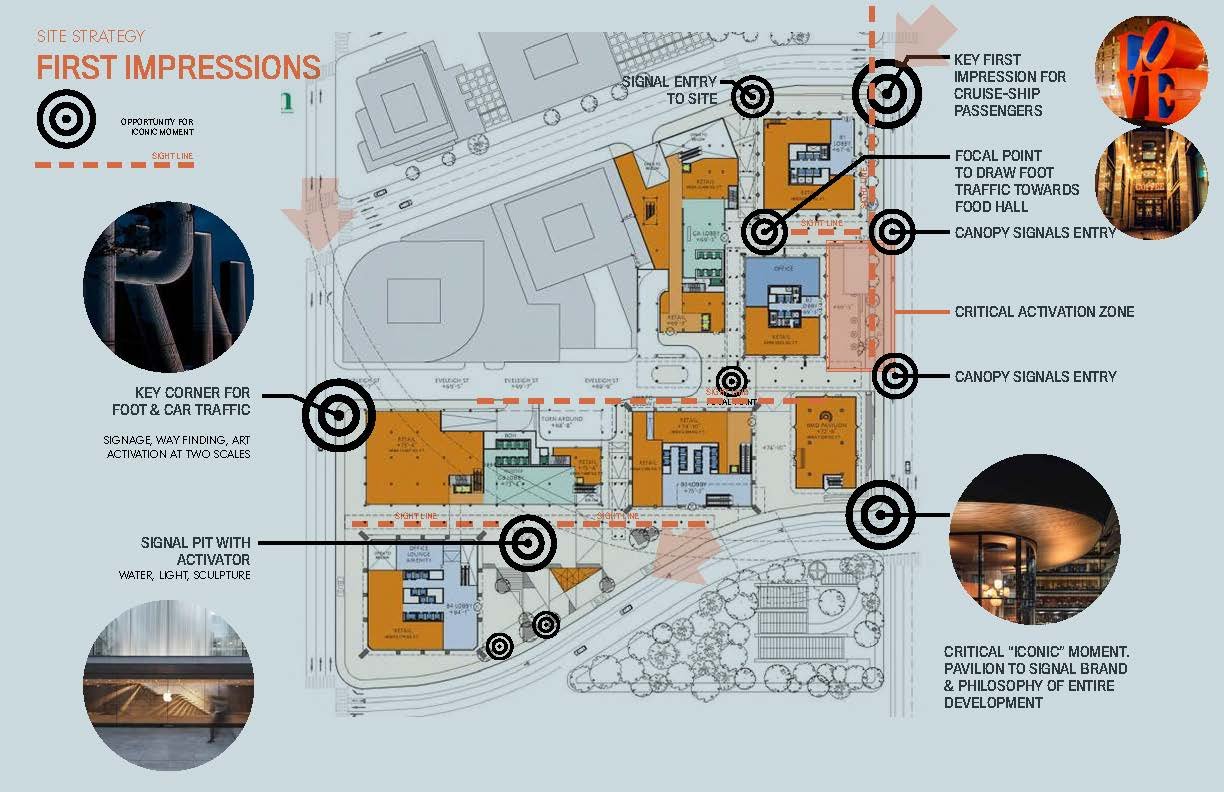
Designing for Movement and Use
Retail was approached as a form of infrastructure—something that shapes experience as much as it supports it.
A set of behavioral levers guided the tenant mix:
activity across the full span of the day
appeal to overlapping audiences
the ability to draw people through, not just toward
a range of price points and dwell times
a balance of local and global presence
Rather than grouping tenants by category, the mix was curated by how each use performs: when it opens, how long people stay, and what it activates around it.
This thinking informed a series of tools—from tenant evaluation frameworks to typology studies—used to calibrate the mix over time.
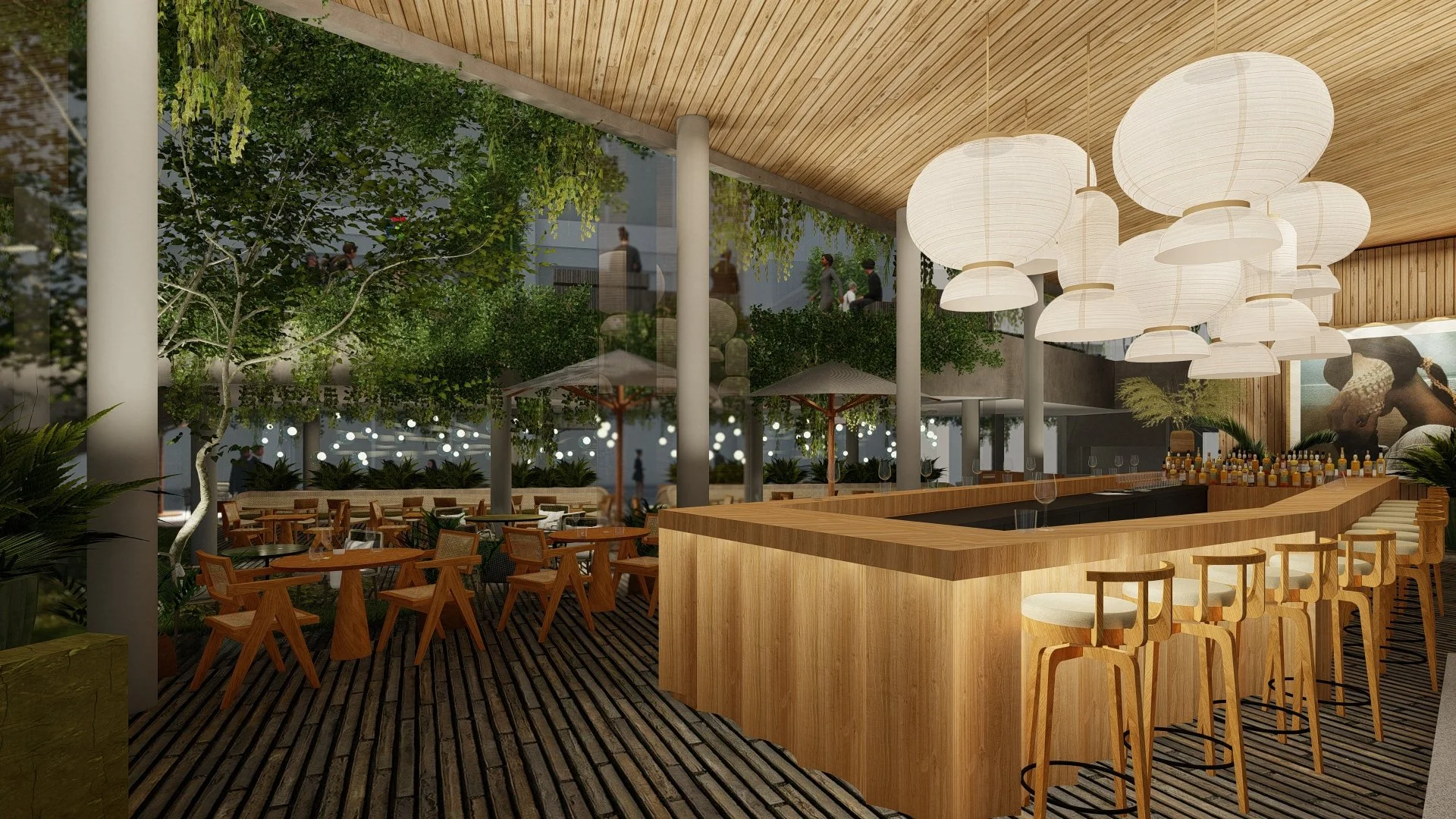
Site Moves
With much of the retail located below grade, the challenge extended beyond programming. Visibility, access, and perception became equally critical.
A series of targeted moves reshaped how the site is experienced:
anchoring key areas to create draw at multiple levels
positioning food and beverage as a primary attractor at grade
distributing uses to extend activity into early morning and evening hours
introducing a wider range of unit sizes to support both established and emerging tenants
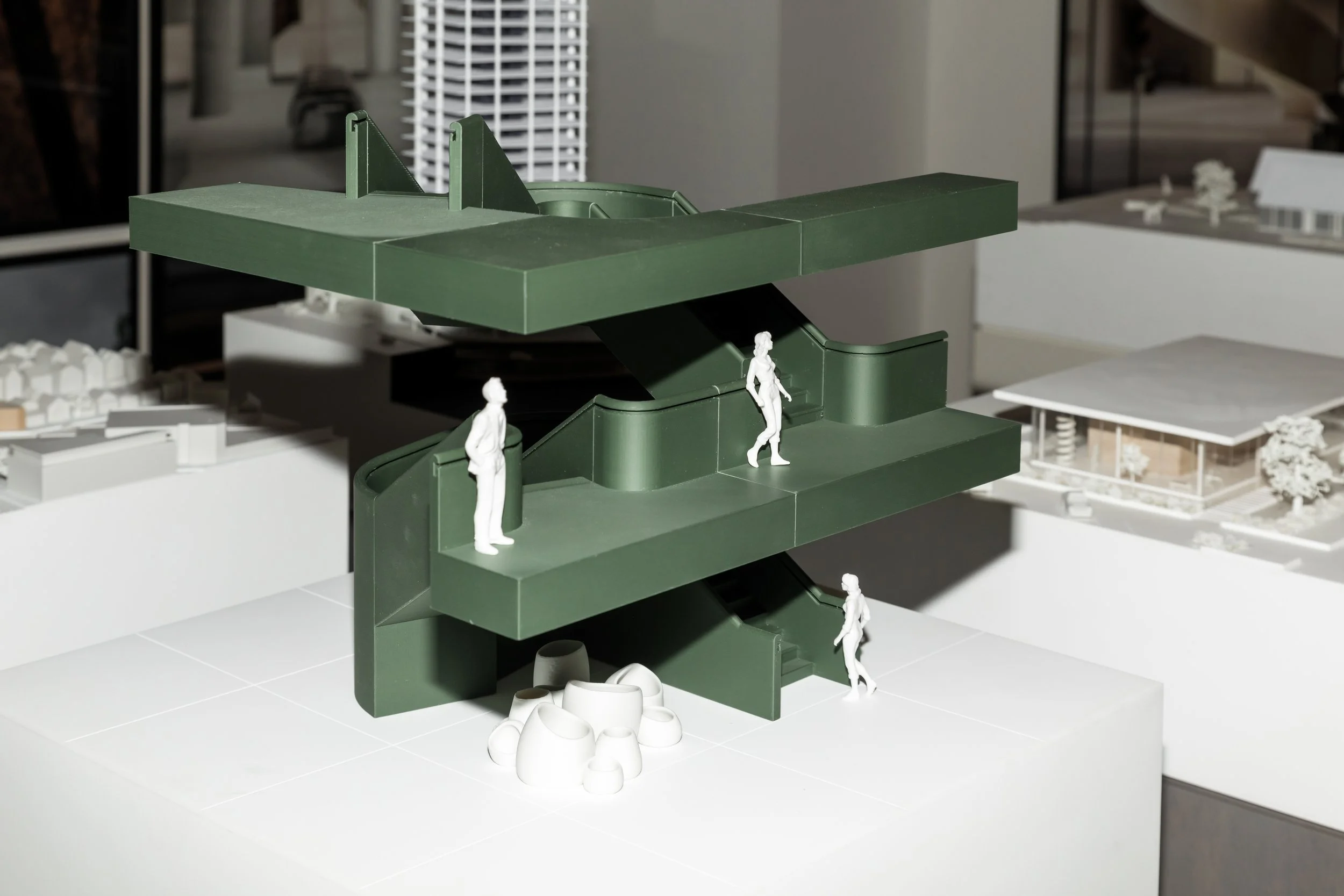
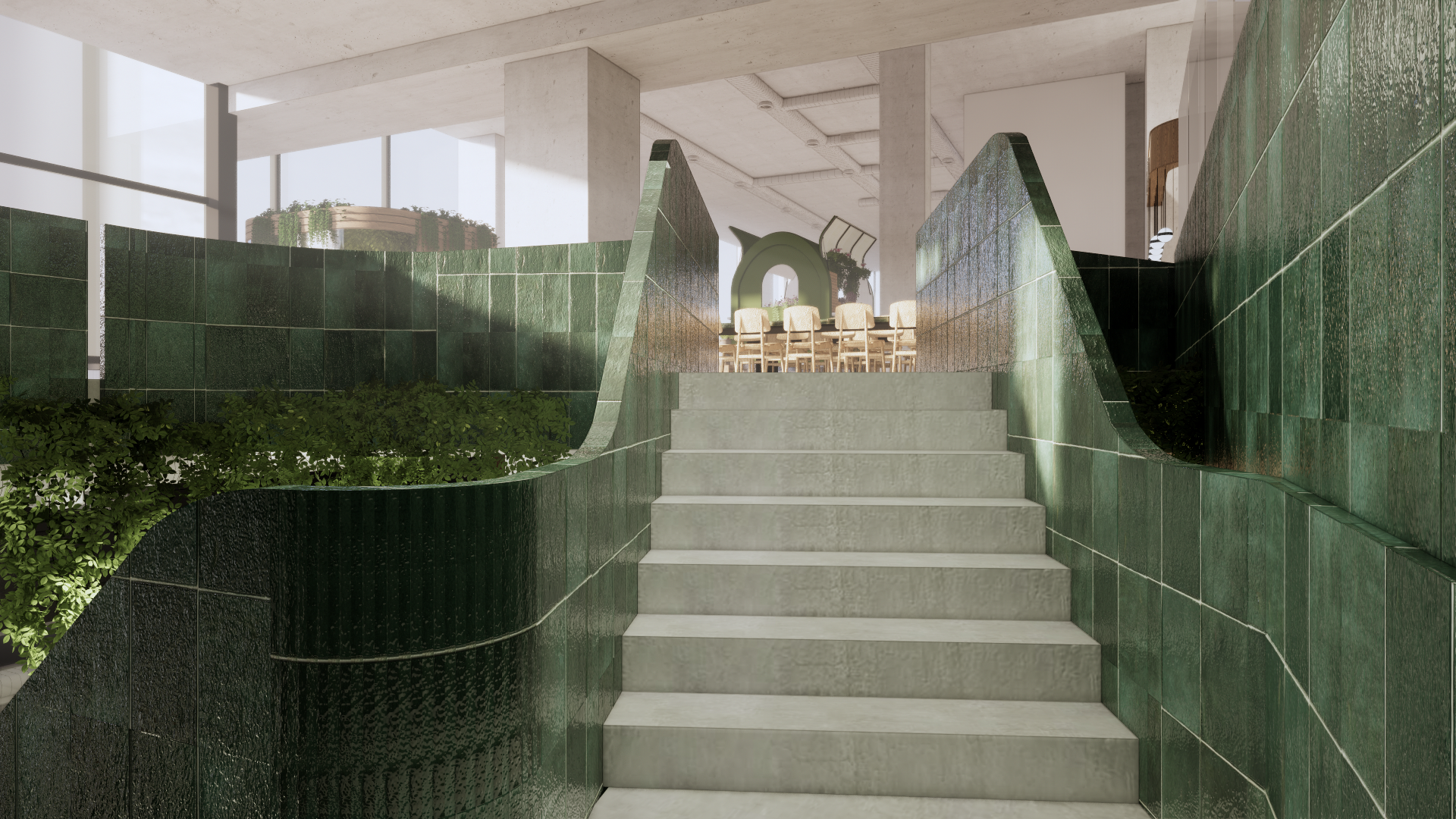
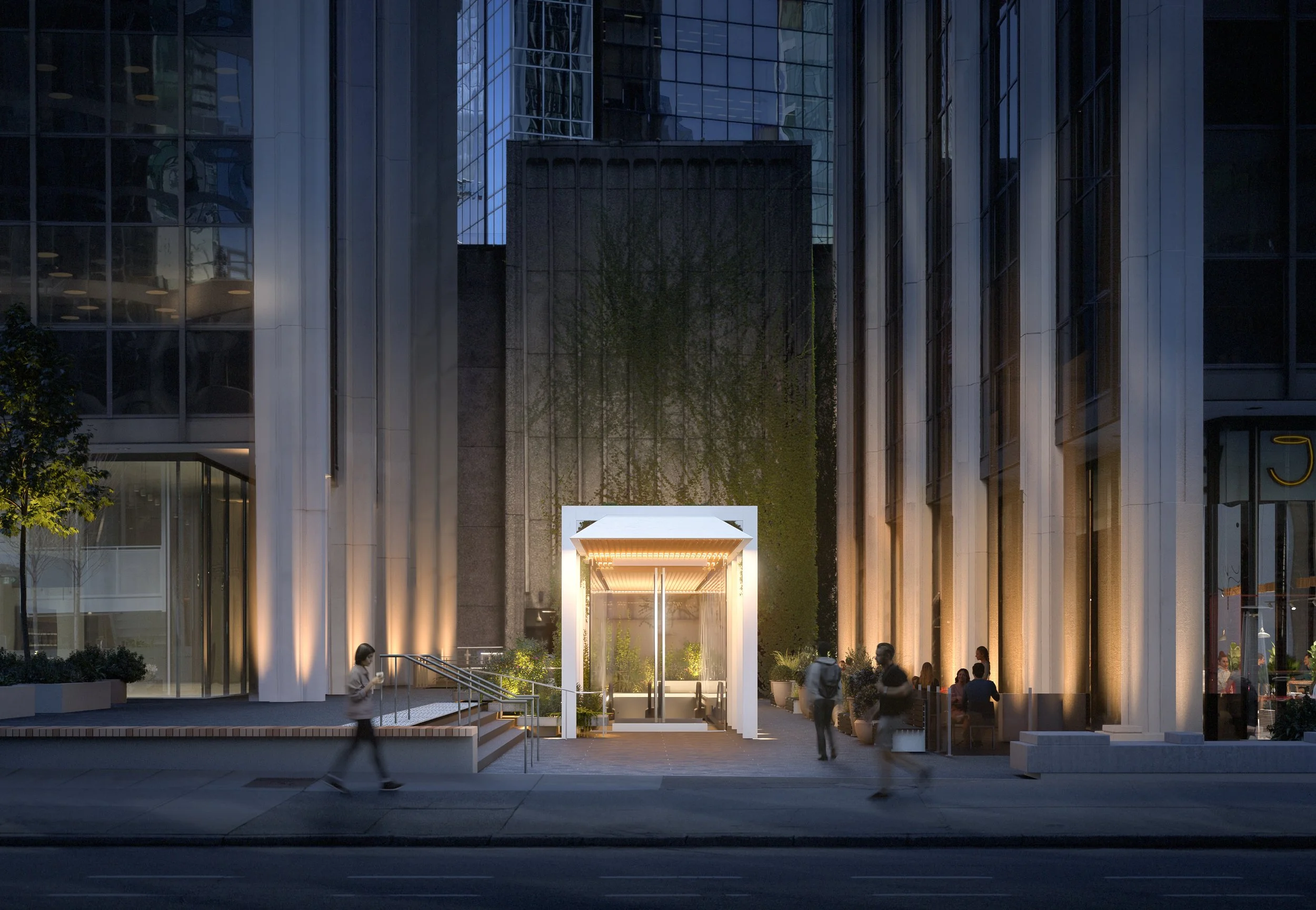
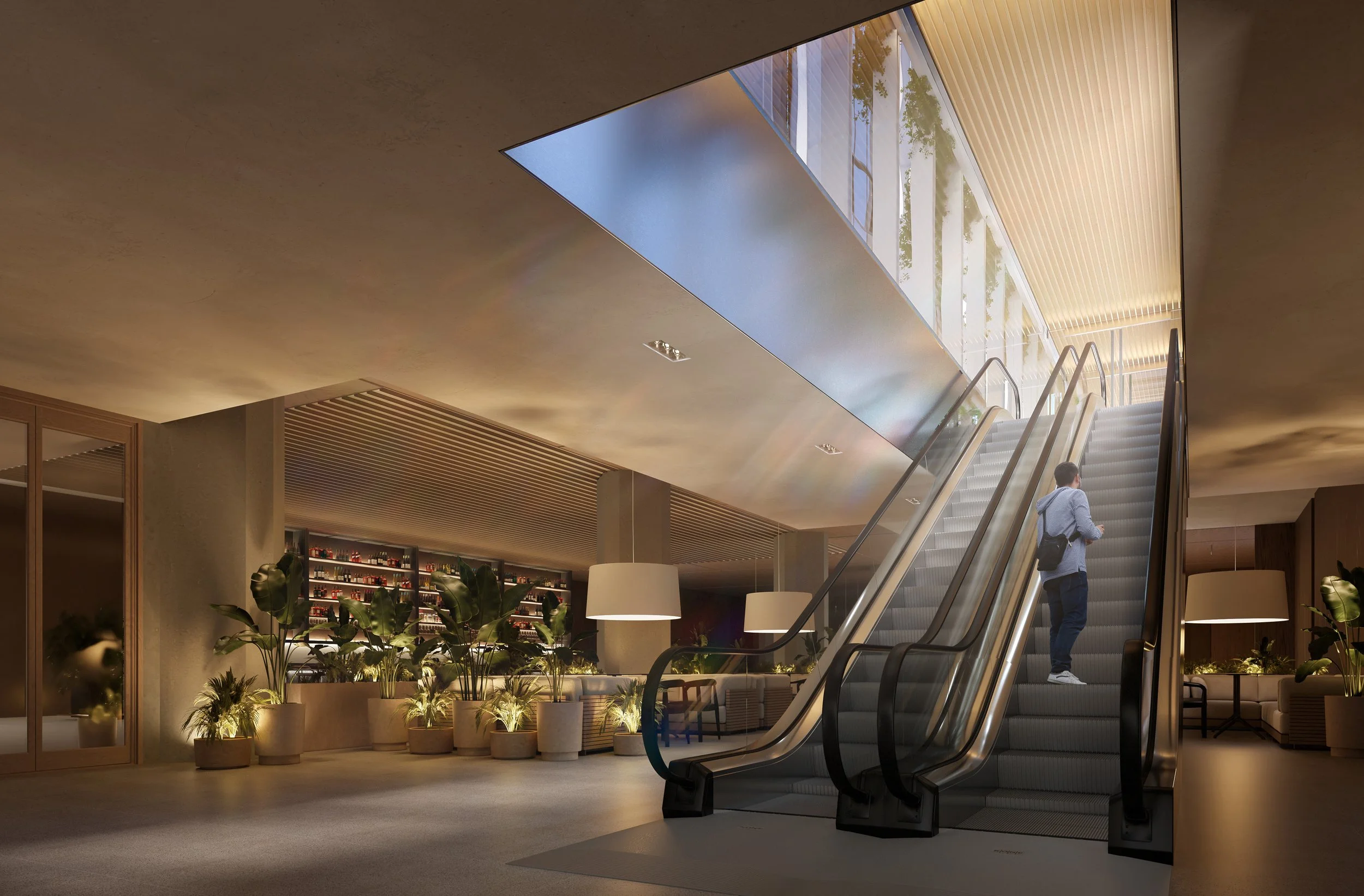
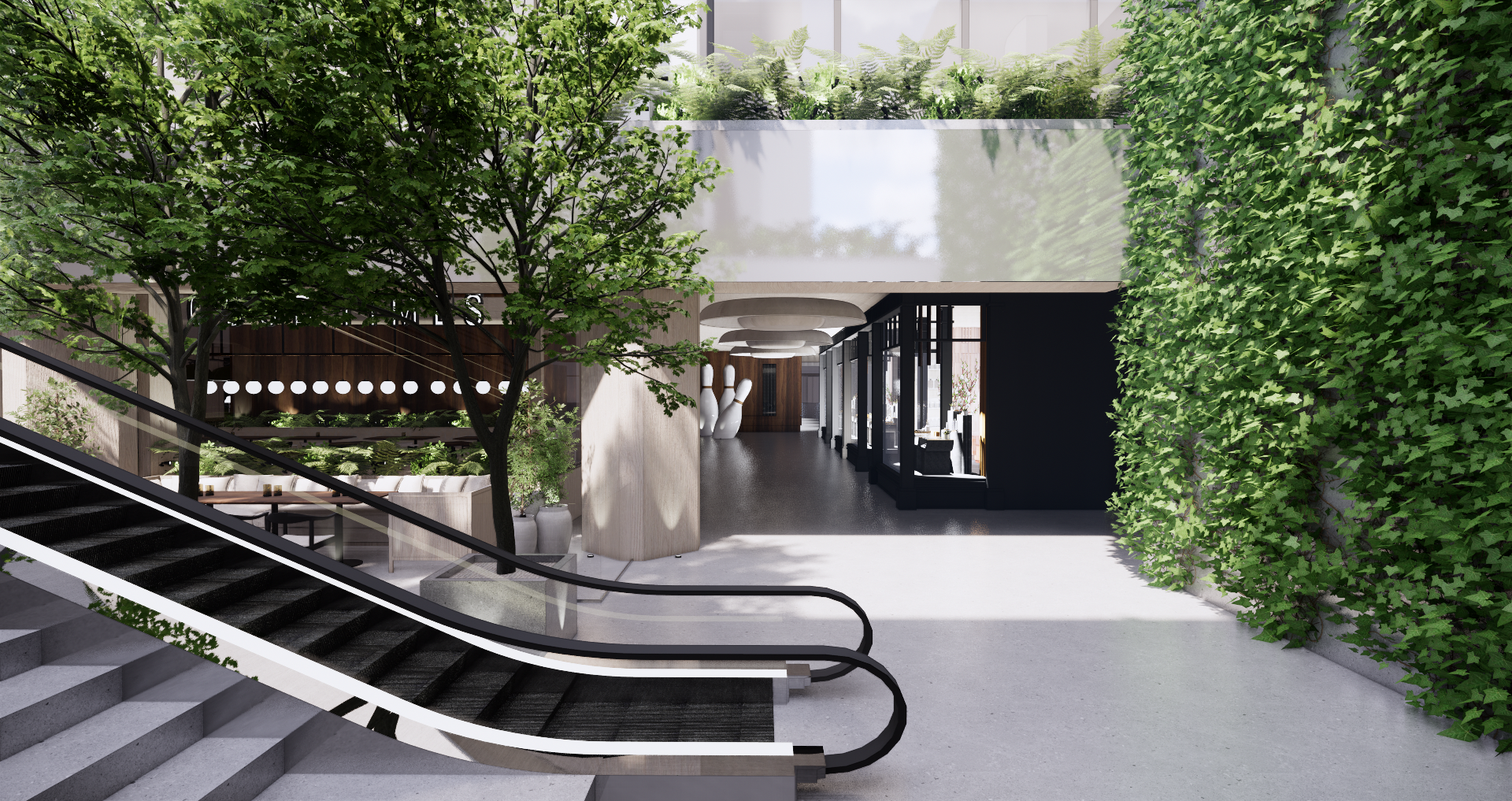
Architectural interventions reinforced these strategies. Vertical connections were clarified and amplified. The public edge was opened and activated. Landscape and material cues were used to guide movement intuitively through the site.
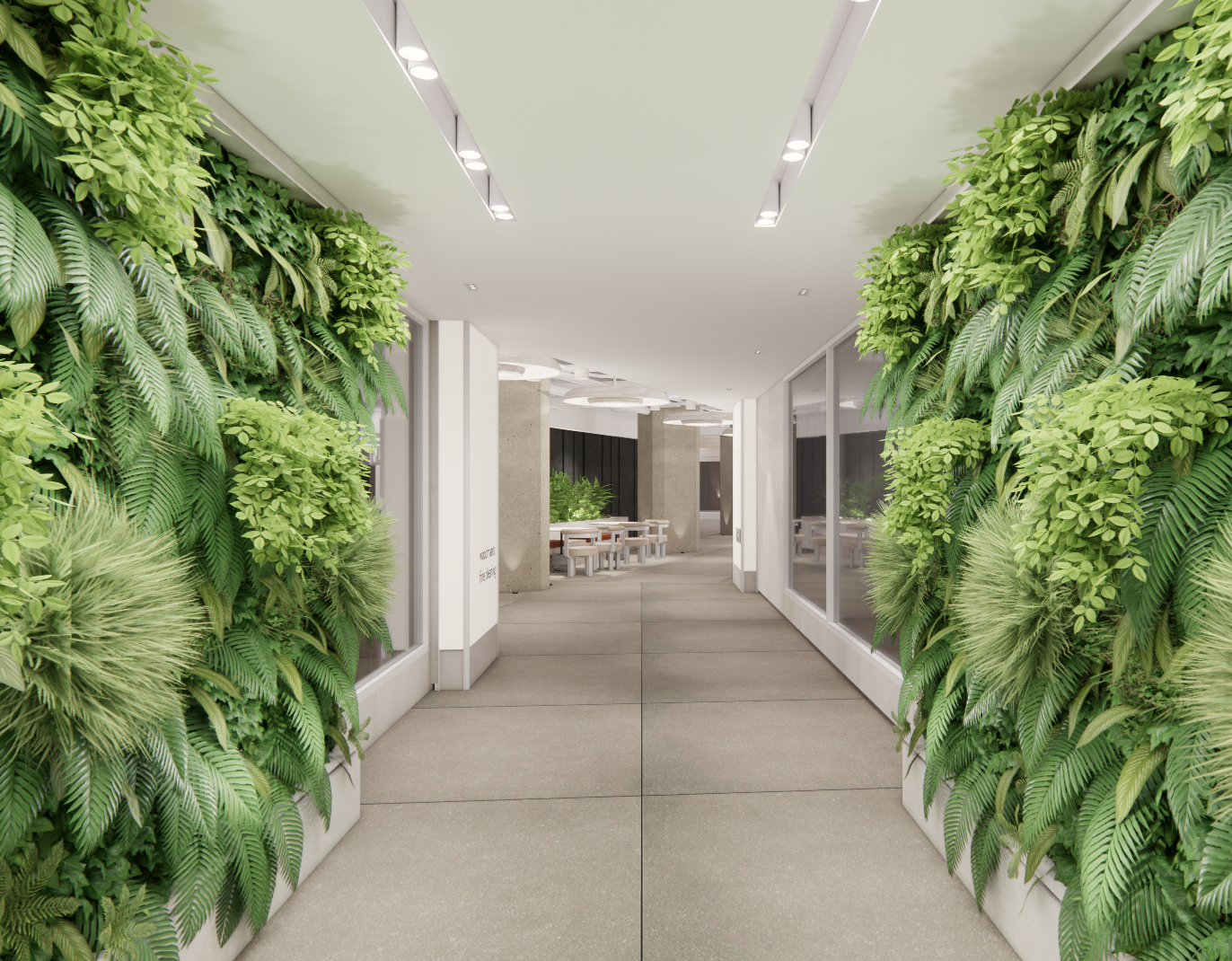
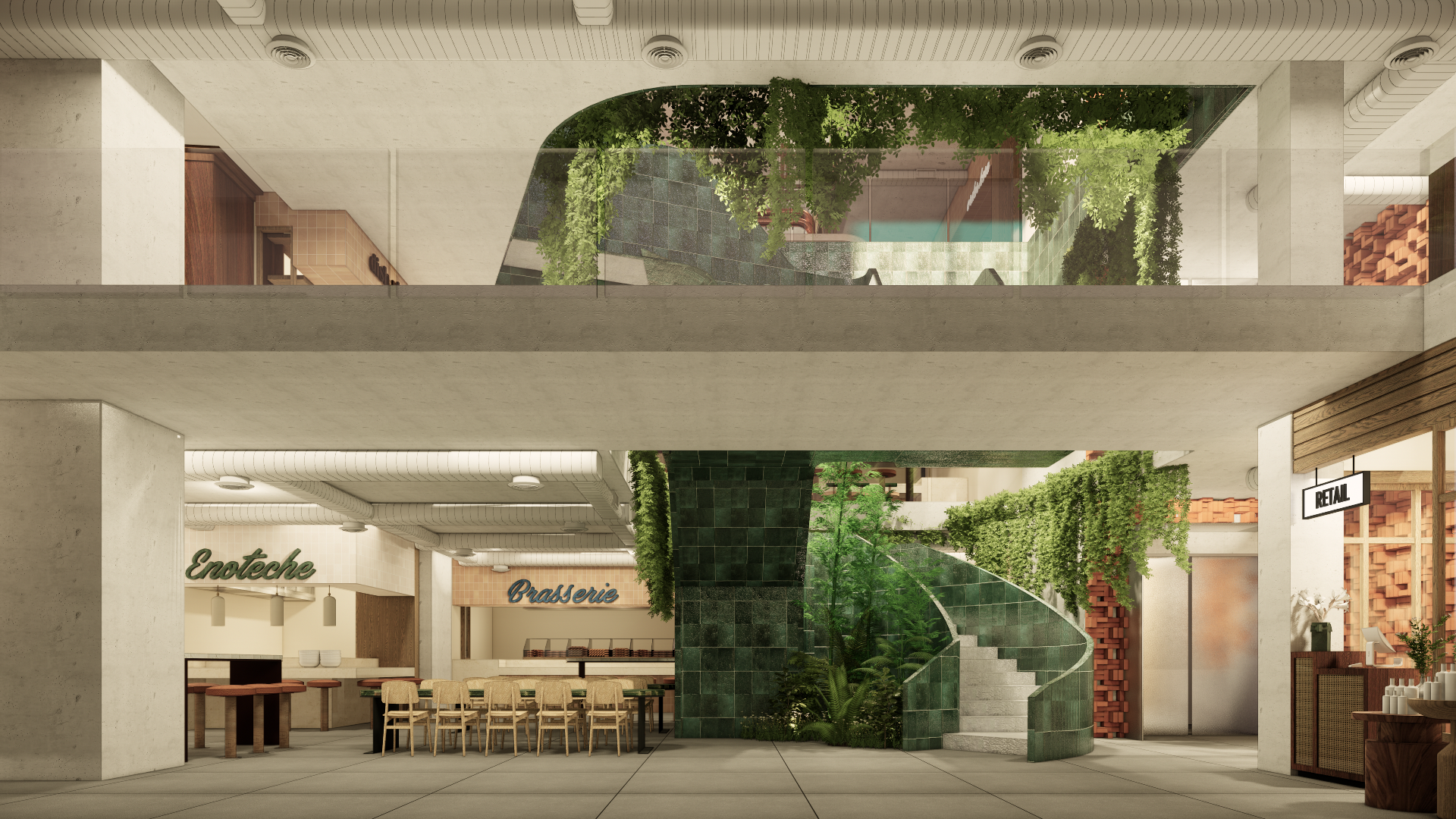
Increasing Porosity
At its core, the project is about porosity—both planar and sectional.
Sightlines are opened. Edges are activated. Moments of density give way to moments of release.
Movement becomes less prescribed and more exploratory, allowing the site to be read as a continuous experience rather than a collection of parts.
Outcome: A Strategy made spatial
Planning efficiencies unlocked additional leasable area, while a clearer spatial logic improved navigation and visibility throughout. More importantly, the campus was repositioned to support a broader, more consistent pattern of use—throughout the day and across seasons.
What emerges is not a singular design gesture, but a framework for how a place can perform: attracting, connecting, and evolving over time.