making the invisible visible
Role: Strategy Lead
Typology: Speculative Design: Health Tech
Scope: User research, market fit, trend forecasting, futures, product ideation, visual identity
Completed with: Elisava
Speculative design for ocular health in a screen-filled world.
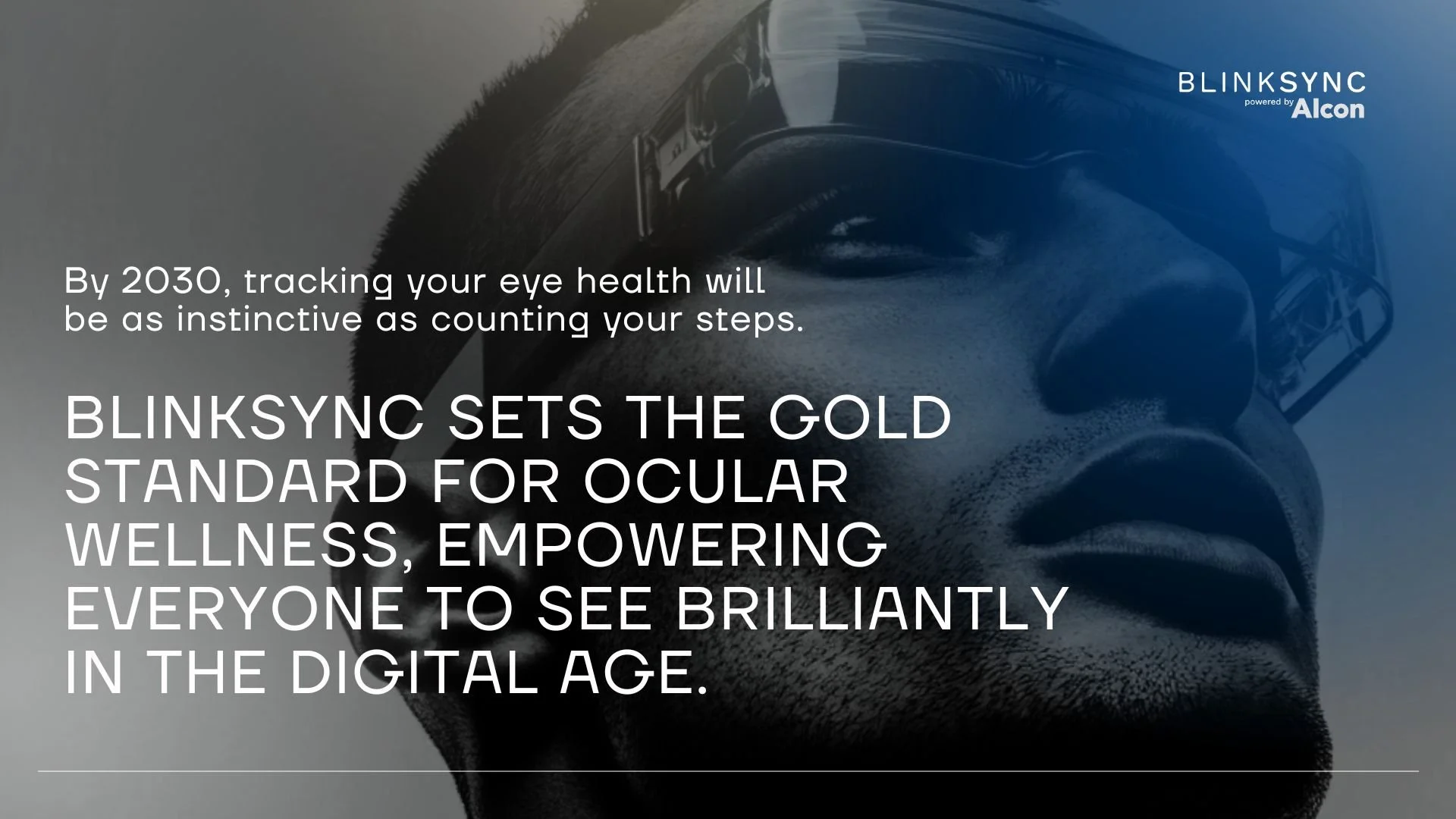
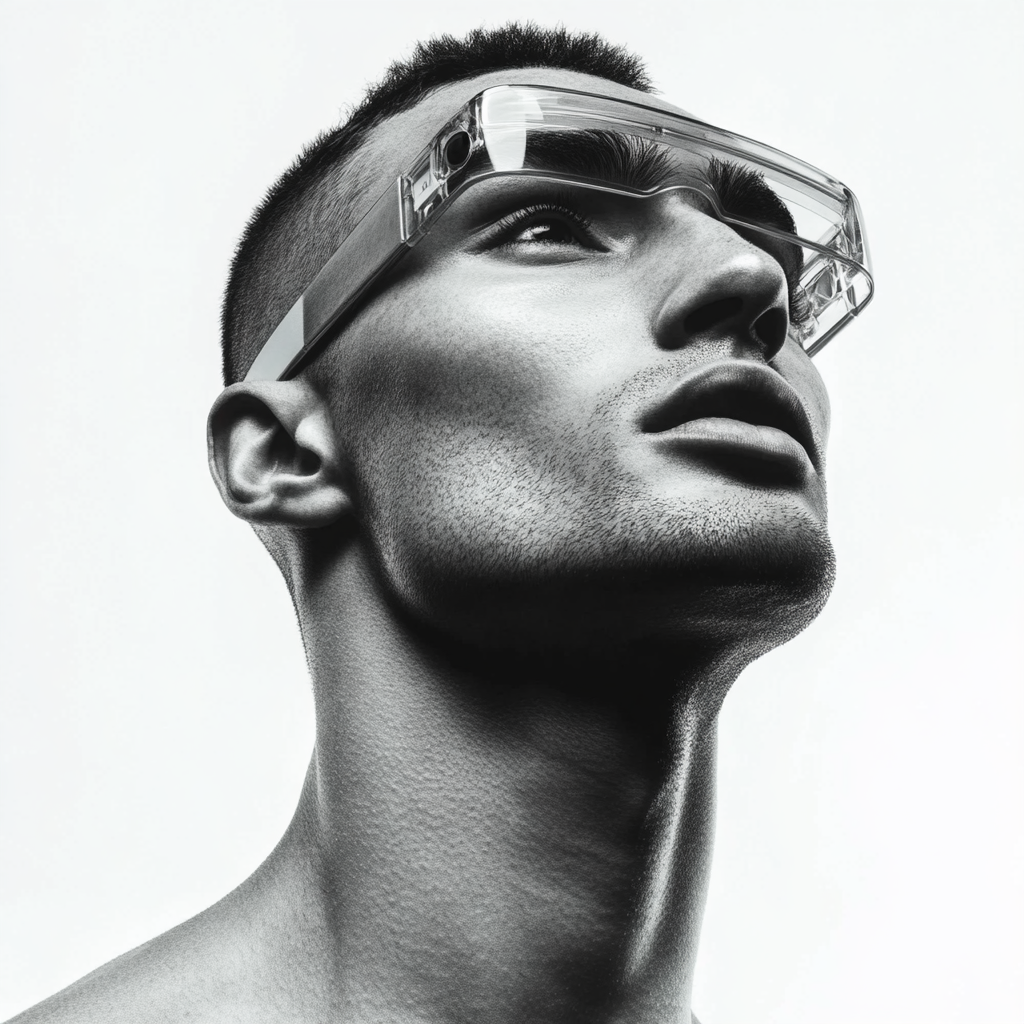
BlinkSync is a speculative 2030 eye-health platform that combines biometrics, existing screen and camera technology and future-focused research to address the growing problem of screen-related eye strain. It was developed as a masters project for a global eye health company, and was selected as the winning concept for presentation at the company’s global Digital Wellness conference.
The real question…
The Client’s Question
How might we mitigate the risk of digital screens to ocular health?
The Real Question
How might we make tracking eye health as straight-forward as counting your steps?
Estimated average amount of time one person will spend on screens over the next five years.
Research
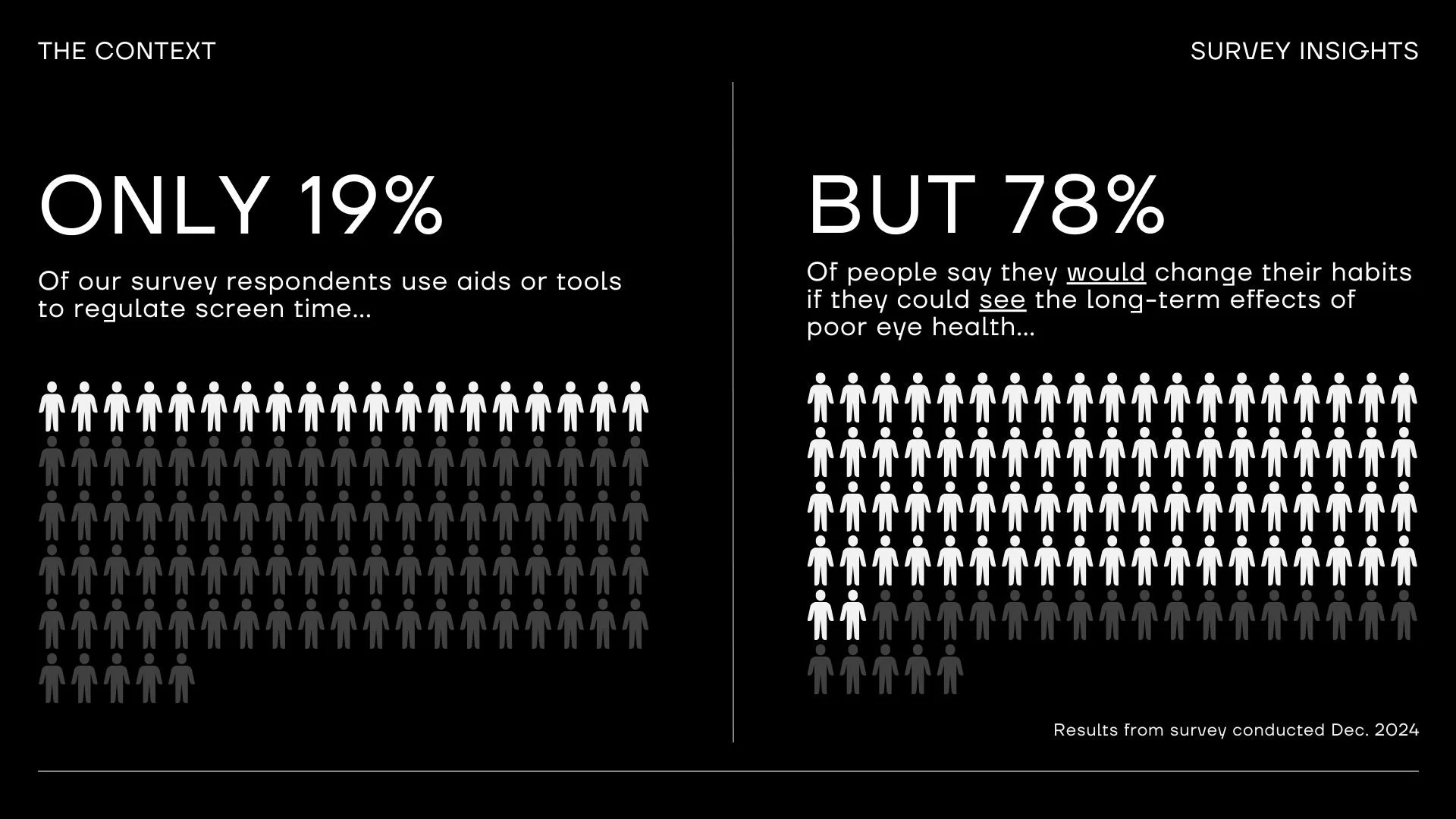
We began by looking beyond traditional eye care to understand the wider forces shaping digital health.
Research explored emerging technologies, healthcare and wellness behaviours, screen habits, biometrics and changing attitudes toward preventative health. We mapped the existing ecosystem around digital eye strain and identified where technology could make eye health more visible, measurable and actionable in everyday life.
The research pointed to a broader opportunity: as people become accustomed to tracking sleep, activity and other health metrics, eye health could become part of the same everyday feedback loop.
Futures & Foresight
We used futures research to explore how this opportunity might develop by 2030.
Rather than designing for today's technology alone, we considered how advances in biometric sensing, cameras, personal data and preventative healthcare could change the relationship between people and their eye health.
This helped us define a future context for BlinkSync: a world where the health effects of screen use can be continuously understood, rather than only addressed once discomfort or damage appears.
Speculative Design
We then used speculative design to make that future tangible.
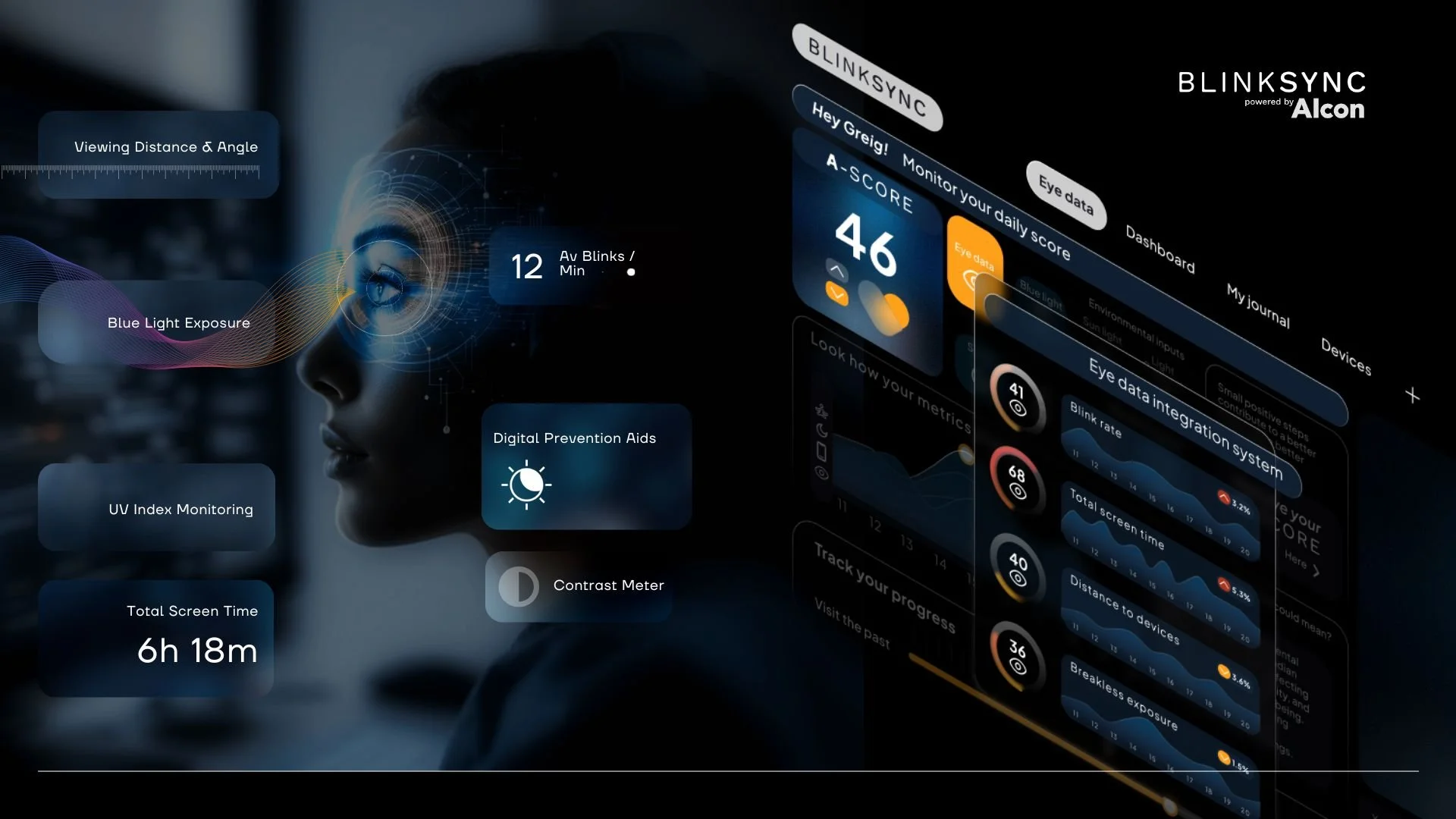
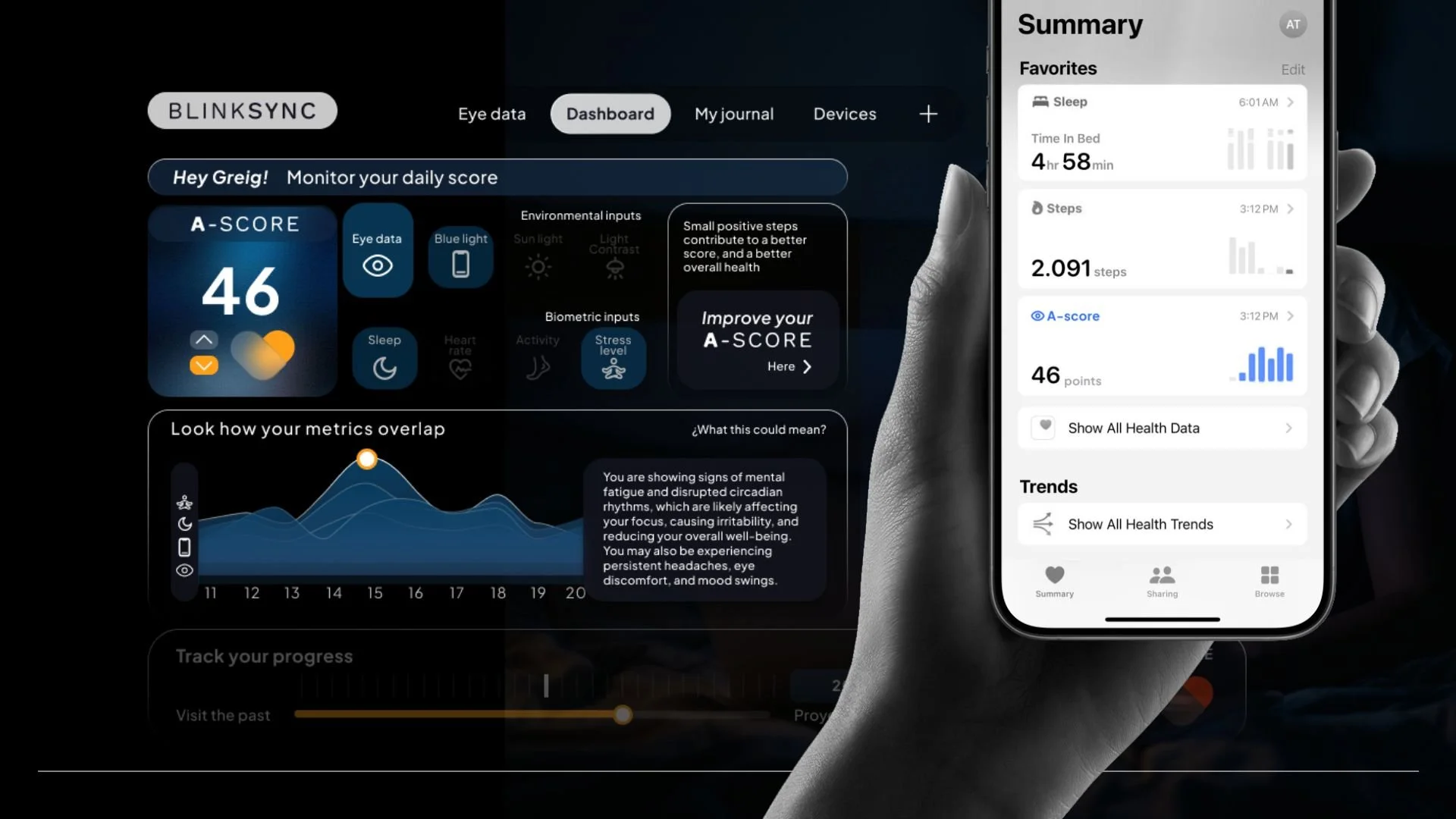
BlinkSync became a fully conceptualized product and ecosystem, combining biometric monitoring with existing screen and camera technologies to identify patterns associated with digital eye strain.
The work explored the experience across product, service and brand — from the platform itself and its feedback mechanisms to its visual language, positioning and potential partnerships.
By designing BlinkSync as though it already existed in 2030, we could examine the implications of the technology as well as its potential: how people might use it, what information they would trust, and how continuous eye-health monitoring could become part of everyday behaviour.
From Research to Opportunity
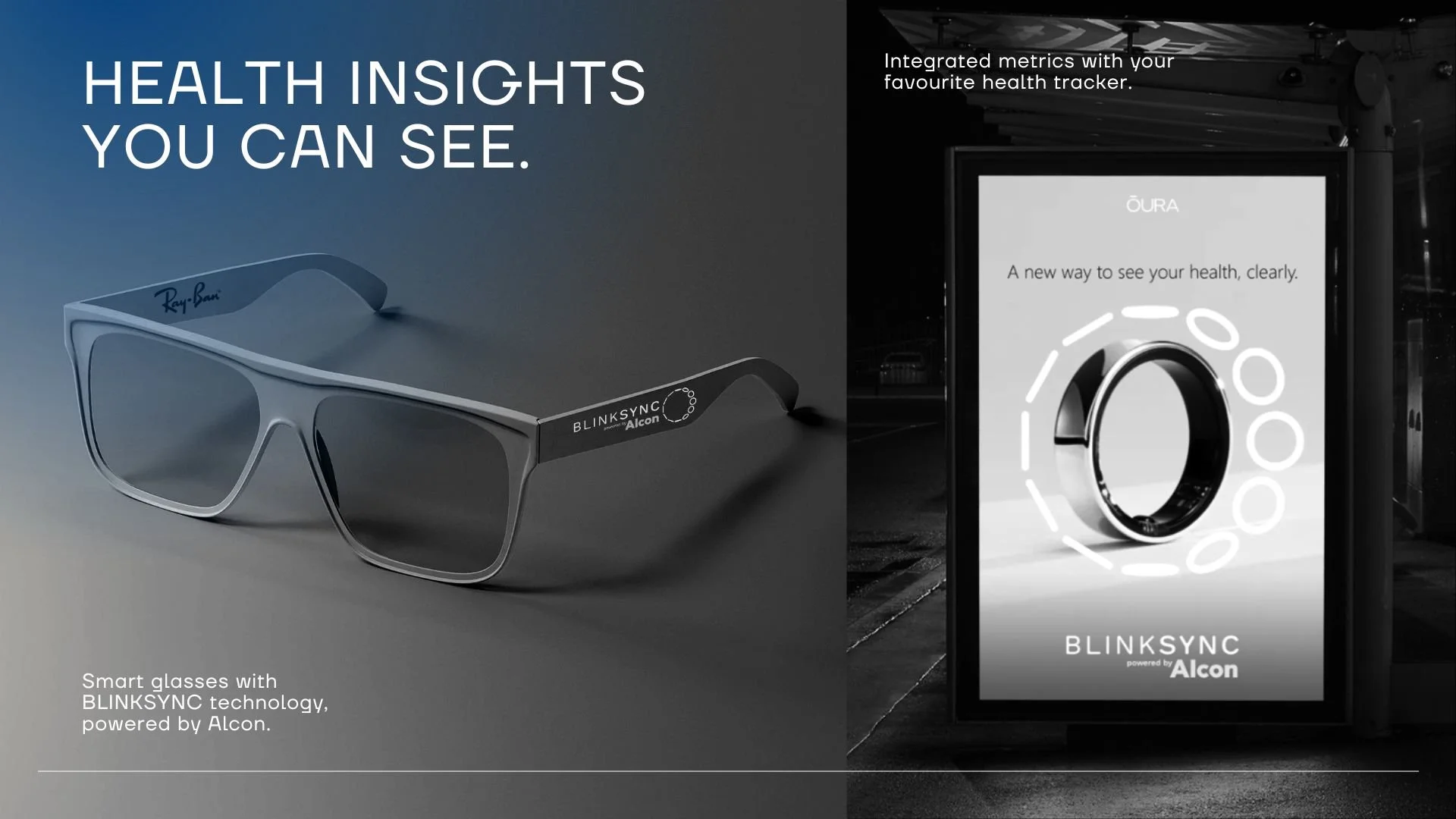
The final concept brought together cultural research, futures thinking and speculative design with a commercial assessment of the opportunity.
We developed the proposition, market sizing and TAM/SAM/SOM analysis, explored potential partnerships and defined a business and brand direction for the platform.
The result was a speculative future made tangible: a product concept that showed how emerging technology could transform eye health from something people check occasionally into something they understand and manage every day.